Showing posts with label trivia. Show all posts

Monday, February 8, 2016

Happy Chinese New Year!

新年快乐!
Xīnnián kuàilè
Happy (Chinese) New Year!
恭喜发财!
Gōngxǐ fācái
[Congratulations and fortune]!
大吉大利,
Dàjí dàlì
May you have good fortune,
万事如意,
Wànshì rúyì
May your dreams be fulfilled,
身体健康!
Shēntǐ jiànkāng
May you[r body] be healthy,

and most importantly...
红包拿来。。。
Hóngbāo ná lái
Gimme the red envelopes (with money in it)!

Well, that last one is, strictly speaking, not a proper traditional greeting. But I kid you not during the last post: the Chinese has many, many proverbs and greetings and sayings. That lot are just a few of the possible hundreds of wishes of good luck during the new year.

And that's just for the new year. There are much more for birthdays, marriages, opening up a shop, and wishing good luck for an exam. (Speaking of exams, there seems to be a Biology test tomorrow, right after this holiday.) Now, couple that with the sheer number of Chinese characters (Hanzi) we need to know for each of those wishes, well... people's fears of learning this language are understandable.

Can't change much about that, could we?

But for now, let us all accept all these greetings this fascinating and colorful language has to offer us. Happy Chinese New Year.

Sunday, February 7, 2016

Homophones: The Meaning of Chinese New Year Dishes

The Chinese New Year is incoming. It'll be the D-day tomorrow, and I do believe many people have started in the festivities of the new year. No doubt the people who are Chinese, and those whose ancestors came all the way from China, are preparing for this biggest of holidays of China, and I believe it will be proper to share several things about this new year I've just learned from Chinese class at school.

But first, let me just put it out that indeed, I am an Indonesian who has Chinese blood. However, I must learn the language and traditions, due to the New Order regime of Soeharto, who made us hide away.

The most striking things during Chinese new year are of course the big red decorations, the big dragon dance parades, and surely the big fat red packets filled with money (红包, hóng bāo). Also, the less grand traditions must include Chinese cuisine.

The night before the New Year, which is this night, we will always have a big, big feast, where family and friends gather together: the new year's eve dinner (年夜饭 nián yè fàn). This feast would never be complete with some of the traditional dishes and snacks. But, what's the story behind them? Why must people eat fish, new year cakes, dumplings, and much more during the new year?

It all comes down to language.

Chinese has much, much different symbols for each word, and many words are written differently but read the same way. Yes, the language has four tones (or five, counting neutral tone), but even then, there are countless words with the exact same syllable with the exact same tone. No wonder people--myself, included--become confused. These words are homophones, which are pronounced the same. We find them in English all the time: I and eye, there and their, pi and pie.

First, we have to eat fish during the new year. However, we must not finish the fish during that night; we must save it for tomorrow. It turns out, the Chinese word for fish (鱼, yú) and surplus (余, yú) is pronounced exactly the same. Thus, by saving our fish for the day after, the old men say that this will bring fortune, surpluses year after year. This goes along with the proverb, 年年有余, nián nián yǒu yú.

Next up, new year cakes, or here we call them kue keranjang. Truthfully, never been too keen on eating one of those of its strange color, but supposedly it tastes sweet, and kids usually like them. And kids should like them, as it'll make them taller. See: the term for new year cakes in Mandarin (年糕, nián gāo) sounds the same with the word for tall (高, gāo). For older people who cannot grow taller, at least it'll make their fortune 'step up' (步步高升, bù bù gāo shēng).

Another important dish to eat are dumplings (水饺, shuǐ jiǎo). Well, this one is only sometimes found in my new year's eve dinners, though a mainstay in other countries. This one's sound does not really match any proverbs, thankfully enough. However, their traditional shapes look like old Chinese money. So, by eating them, you'll be blessed with good fortune.

Those three are just about all foods and snacks described in detail in my Mandarin classes. However, here we almost always have to eat mandarin oranges and sunflower seeds. Sunflower seeds, or kuaci as we call them (瓜子, guāzǐ), as life-giving pieces of a plant is promised to give us plenty of descendants (多子多孙, duō zi duō sūn). The oranges (桔子, júzi), which look rich and juicy, is the only peculiar one with seemingly little connection to its proverb, promises to bless us with good fortune (大吉大利, dà jí dà lì).

There we go, the most-eaten dishes of the Chinese New Year. Each has its own meanings, dating back to ancient China, brought around the world with the spread of this rich, ancient culture. Surely, there are still many, many dishes and even decorations of the New Year, each with proverbs to go with them, but that won't fit in one or two articles, and besides, I haven't learned that much Mandarin. So, prepare these treats for this night, to bring yourself fortune!

I'll be back to weathering my cold, then. Seriously, why must a flu strike right before Chinese New Year?

Tuesday, January 12, 2016

The Power of Eyeglasses: A Return to School

School started yesterday. It was the end of a long, long holiday--the longest holiday ever in my recorded history (That is, in my school. Bet some of you could have a whole month off). It was already filled with fascinating new physics equations, fascinating new chemical equations, and fascinating new talks about how our bones are made.

Doesn't new knowledge and ridiculously challenging tests sound entertaining?

No. No sarcasm there.

That holiday's end does mean several new stacks of homework. However, we did have a class Christmas party today. Then, we cleaned the hallways: something that never happened in the school. Quite hard work being those office boys and girls. Thank you kindly.

That said, the first week won't be too depressing, I think. I've still time to watch several stuff (which I may write a review for here), and play Life is Strange (discussions may be coming). So, I also have time to write here. 

Let's get on to the school spirit with this post, shall we? Didn't lie when I said I like school.

Now, I went to the opthalmologist (eye doctor; please, somebody out there should also know) around a month ago, and got my verdict: Minus 6.5 on my right eye, and 4.5 on the left. Quite impressive. Well, to be expected as my eyes have been worsening since first grade, or perhaps technically since two or three, when I started drawing, with my eyes just several centimeters from the paper.

Quite a severe nearsightedness.

About nearsightedness or myopia, it is when your lenses focus light before the retina, thus the images we view become blurry. To correct it, we myopians use concave eyeglasses.

Image taken from commons.wikimedia.org
But those eyeglasses are quite costly, are they not? Moreover, we also need to pay the doctors to check how bad our eyes really are.

Let's cut costs, eh?

The thing to understand is that our eyes has a far point, the farthest point an object is we can focus with our eye accomodation (that is, muscles reshaping the lens). The more often we see stuff that are near to us, the closer that far point becomes.

Please forgive the hastily drawn figure.
On a normal eye, that far point is at infinite distance from our eyes. A myopic eye will have a reduced far point, let's say, x. So all the concave lens needs to do is to put the image of an object at infinity to x, where the eye could see it.

We could use the formula for lens focus length, already learned in junior high physics:

Where f is focus, So is object distance from lens, and Si is image distance. Power of lens, which we want for our eyeglasses, is 1/f. We could also input a number to the variables.
The object is at infinite, and we would want to get the image at the myopic far point at x (in meters). The image distance is negative because it is in the same side of the lens. Then:

One divided by infinity is darn close to zero, so we can ignore it. For convenience, we could use centimeters for x if we make the numerator 100.

There we go. Let's test by preparing something to read off and a ruler. Close one of your eyes, and move the image or text closer to your eyes until it becomes clear enough. Measure its distance from your eyes. Then use that final equation. That'll be the lens you need for the eye.

For example, my right eye could see clearly at 15.5 cm: very poor sight. If we use that equation, we arrive at around -6.5 lens power. Not too much different from what doctor said.

So, shall we make the doctors go bankrupt?

Well, no. I also have astigmatism, where my cornea is misshapen, making the light rays blurred before it hits the lens. Then, that equation will not work for farsightedness--there is another equation, however it is quite faulty, and I haven't looked it through and through just yet. Only doctors would be able to handle those cases.

So, we won't cut costs anytime soon, eh? And more, with the coming of school, there'll be countless sleepless nights (not really, since Dad shall scream when I stay up past nine) which will further degrade my eyes.

Sad. Well, that's all for this time's useless fact.

___
References
Wikipedia, which is actually not a proper source. Also my physics notebook, also not a proper source.

Sunday, November 27, 2011

Do You Know?

...that 220 million years ago, at the Triassic period, all continents are joined to make a supercontinent, Pangaea.

Saturday, October 29, 2011

What do you think?

Is this picture...


...Look like this animal's head?

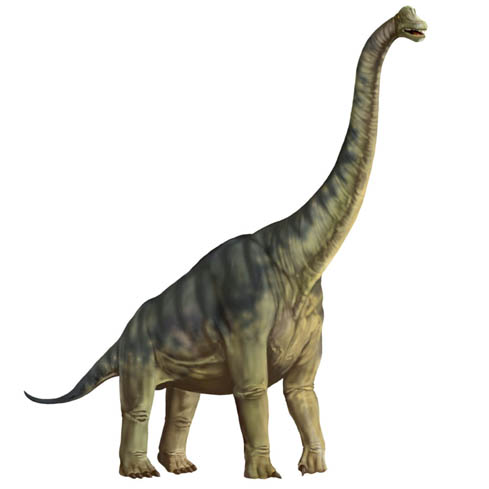
...Sure. The Surgeon's Photo of Nessie is just a Brachiosaurus toy head attatched on a toy sub.

Do You Know?

...That the Komodo Dragon has a scientific name, Varanus komodoensis, which means "monitor lizard of Komodo Island".

Wednesday, July 27, 2011

Planet Colony Facts

I got the idea from space colonizing games, books and "The Universe" on History Channel.
PS. I'm not promoting it.

Sunday, July 24, 2011

Do You Know?

...that days are longer than years in Planet Mercury.

One year: 55 earth days
One day in Mercury : 87 earth days

Amazing, innit?